
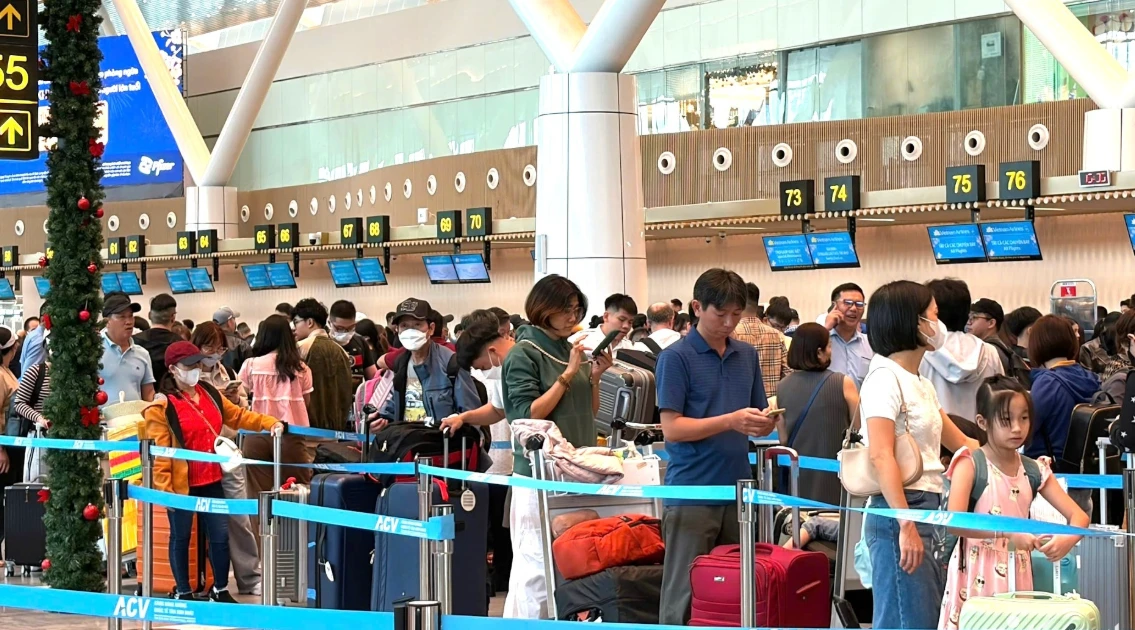


Vietnam fisheries technology exhibition in full swing
At the exhibition (Photo: VNA)The first-ever Vietnam Fisheries Technology Exhibition ( FISTECH 2023 ) opened in the northern coastal province of Quang Ninh on July 5, featuring around 100 booths from nearly 100 domestic and international firms and organisations.Introduced at the three-day fair are various aquaculture and seafood processing products, including feed, medicine, additives, machinery, and equipment.On the sidelines, there is a seminar on Vietnam ’s fisheries technology, where leading domestic and foreign experts are sharing information, updating knowledge, and presenting the latest technologies in aquaculture.The seminar is set to cover such topics as the application of advanced technologies for efficient commercial shrimp farming, and sustainable marine aquaculture development in Quang Ninh and other provinces in the Red River Delta, among others.The event is expected to attract around 8,000 visitors, including scientists, managers, businesses, farmers, and students from across the northern region./.
Source:Viet Nam News
July 05, 2023 16:14 UTC
Vietnam's proposal at 43rd FAO conference’s plenary meeting
Politics Party delegation pays working visit to Bolivia A delegation from the Communist Party of Vietnam (CPV), led by Le Hong Quang, a member of the Party Central Committee and Secretary of the Party Committee of the Mekong Delta province of An Giang, is paying a working visit to Bolivia from July 3-7. Politics Vietnam always considers France a priority partner: PM Vietnam always considers France one of its priority partners based on sincerity and trustworthiness in its foreign policy of independence, self-reliance, multilateralisation and diversification of ties, Prime Minister Pham Minh Chinh told outgoing French Ambassador to Vietnam Nicolas Warnery during a reception in Hanoi on July 6. Politics PM Pham Minh Chinh hosts Bruneian Ambassador Prime Minister Pham Minh Chinh hosted a reception for the new Ambassador of Brunei to Vietnam, Datin Paduka Malai Hajah Halimah Malai Haji Yussof, in Hanoi on July 6. Politics ☕Afternoon briefing on July 6 The following is a brief review of the day’s events as reported by the Vietnam News Agency.
Source:Viet Nam News
July 05, 2023 16:14 UTC
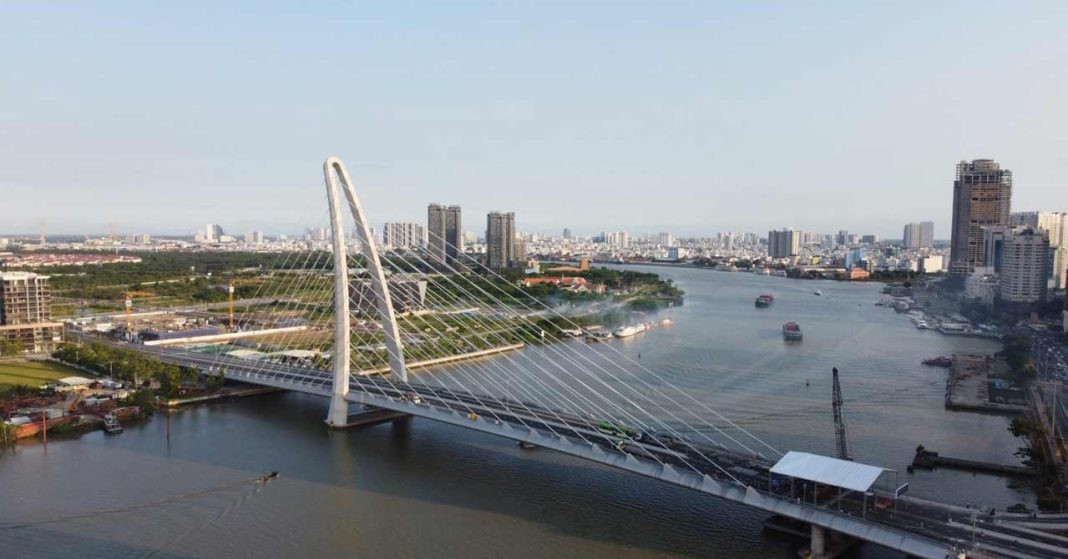
VIETNAM NEWS HEADLINES JULY 5/2023
The remaining three projects, including those of Tasco JSC, Vietnam Waste Solutions Inc and HCM City Urban Environment Co Ltd, are finishing legal procedures for investment. It was an occasion for not only introducing the culture of Vietnam but also connecting OVs from around the world. Regine Le Normand, Deputy Mayor of Larmor-Plage, held that after joining dances, enjoying colourful traditional costumes, and tasting attractive dishes of Vietnam, local people will want to learn more about Vietnam and even come to the country to directly experience its identities. Therefore, Vietnam will continue to promote cooperation projects with the countries, especially in artificial intelligence, information communication, and automation. Forum underlines need for Vietnam workers to develop skillsImproving access to opportunities for workers in the digital age is a must, said Vu Quoc Huy, director of Vietnam National Innovation Centre.
Source:Viet Nam News
July 05, 2023 05:08 UTC

Vietbeauty & Cosmobeauté Vietnam 2023 - The Unmissable Trade Show To Find New Business Opportunities In the Beauty Industry
Among the fast-moving consumer goods industries, the Vietnamese beauty market has the fastest growth rate and maintains a stable momentum of development. Vietbeauty & Cosmobeauté Vietnam is a combination of two leading exhibitions in the beauty industry. Those are Vietbeauty - one of the largest trade shows in Vietnam and Cosmobeauté Vietnam - the longest-running beauty exhibition with a long history of being held successfully for over 14 years in our country. We hope that Vietbeauty & Cosmobeauté Vietnam will become an annual prestigious destination for retailers, product suppliers, and service providers in the market. Vietbeauty & Cosmobeauté Vietnam is one of the largest and longest-running beauty trade shows in the region, which is annually organized by Informa Markets Vietnam.
Source:Viet Nam News
July 05, 2023 02:01 UTC
Send-off ceremony for female footballers to 2023 FIFA World Cup
Chairman of the Vietnam Football Federation Tran Quoc Tuan said the winning of a berth for 2023 FIFA Women’s World Cup is an achievement of historical significance of Vietnamese football in general and women's football in particular. The 23-strong squad will depart for New Zealand on July 5. They will have nearly two weeks to adapt to the conditions at the venue for Group E matches in the tournament. In the group stage, they will face the US, Portugal, and the Netherlands. Over the past time, the “golden girls" have crowned SEA Games champions for eight times, with many successive, and successfully competed in the AFF Cup and qualified for the 2024 Olympic First Qualifier./.
Source:Viet Nam News
July 04, 2023 14:19 UTC
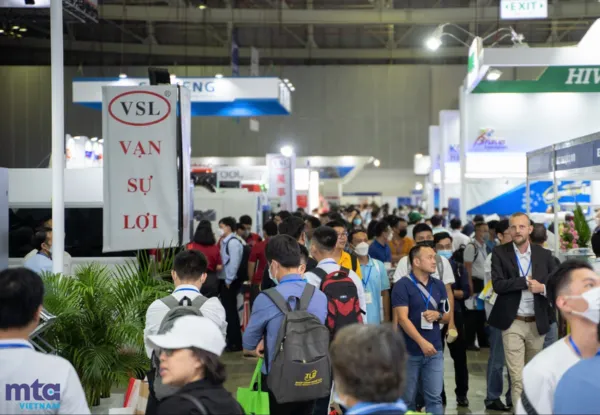
The leading international trade exhibition for precision engineering and manufacturing – MTA Vietnam 2023 returns from 4-7/7 at SECC, HCMC
In particular, MTA Vietnam 2023 is honoured to welcome more than 14 international pavilions to display on a total area of 13,200m2. During the four-day exhibition, MTA Vietnam is expected to attract more than 12,000 trade visitors and business groups from many sectors in the mechanical and manufacturing industry in Vietnam. In Particular, the VINRA area - a totally new exhibit space for breakthrough innovations in automation - is featured for the first time at MTA Vietnam 2023. At MTA Vietnam 2023, trade visitors can expect abundant opportunities to experience cutting-edge technological solutions, gain invaluable experience, and stay ahead of the latest innovation trends. In this edition, MTA Vietnam 2023 is expected to attract 400+ exhibitors, more than 80% of which are from abroad.
Source:Viet Nam News
July 04, 2023 14:02 UTC

Vietjet resumes routes from Đà Nẵng, Phú Quốc to Hong Kong
HONG KONG — Vietjet has reopened direct routes connecting Đà Nẵng and Phú Quốc with Hong Kong (China), responding to the popular demand of people and tourists, the airline announced on Monday. It said the route connecting Phú Quốc to Hong Kong will be operated with three return flights per week every Tuesday, Thursday and Saturday with tickets priced from VNĐ90,000 each way. Meanwhile, the route connecting Đà Nẵng to Hongkong will have four return flights per week every Monday, Wednesday, Friday and Sunday with tickets priced from VNĐ70,000 each way. These tickets (excluding taxes and fees) are found at www.vietjetair.com and the Vietjet Air mobile app, with flexible flight schedules from August 10 to March 31, 2024. Reopening these direct routes, Vietjet says it welcomes people and tourists back on a journey connecting with two of the most famous tourist cities in Việt Nam and Hong Kong, a leading financial centre and Asia's leading shopping, tourism, entertainment destinations.
Source:Viet Nam News
July 04, 2023 12:04 UTC
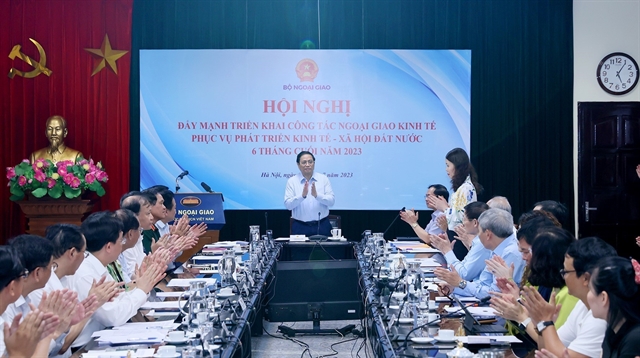
PM attends economic diplomacy promotion conference
HÀ NỘI — Vietnamese Prime Minister Phạm Minh Chính on Monday attended the Ministry of Foreign Affairs’ virtual conference on promoting the implementation of economic diplomacy serving socio-economic development in the last half of 2023. The event gathered participants from the ministry’s headquarters in Hà Nội and 94 Vietnamese representative offices overseas. In his opening remarks, PM Chính praised the ministry’s and representative offices’ close coordination with other ministries, sectors, localities, and enterprises to actively, proactively, and effectively carry out external relations tasks, including economic diplomacy. He expressed his delight at the successful implementation of the vaccine diplomacy, which has contributed to Việt Nam's pandemic control, early reopening, and socio-economic recovery and development. He also highlighted the importance of connecting provinces and cities, representative agencies abroad, and businesses to make the most of every opportunity and demonstrate the highest sense of responsibility for the sake of the nation, the development of the country and the happiness of the people.
Source:Viet Nam News
July 04, 2023 04:32 UTC
VIETNAM NEWS HEADLINES JULY 4/2023
In this regard, Alisjahbana stressed the importance of international cooperation and a whole-of-government and whole-of-society approach in addressing these challenges. He also stated that Vietnam always values human rights and the country respects, facilitates, and encourages activities of socio-political and non-governmental organisations operating in Vietnam. The EU places its trust in Vietnam as an important partner in the green transition process and will collaborate with Vietnam to cope with climate change, the diplomat affirmed. Speaking at the event, Australian Ambassador to Vietnam Andrew Goledzinowski highlighted the Australian Government's activities to reduce carbon and support Vietnam to promote the development of an innovative startup ecosystem and accelerate technology transfer in this regard. Leftist friends and those from the Communist Party USA also spoke highly of Vietnam’s development achievements and voiced their support for Vietnam as well as the development of Vietnam – US relations.
Source:Viet Nam News
July 04, 2023 04:11 UTC
PMI recovers slightly, but still below threshold of 50 points
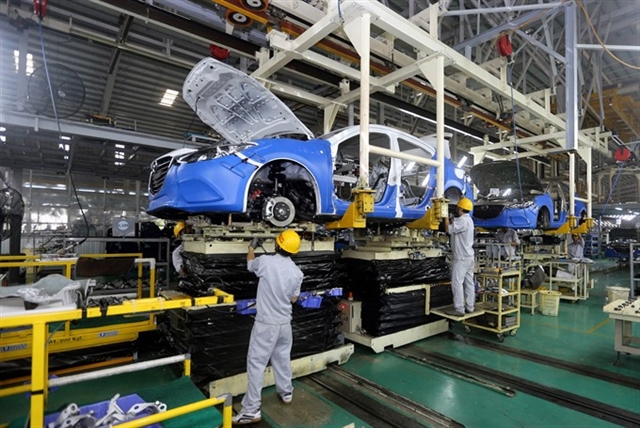
Reports of demand weakness were prevalent throughout the latest survey, with deteriorating market conditions the primary cause of the latest reduction in new orders. New export orders decreased more quickly than total new business amid declining demand in international markets. Production was down across each of the consumer, intermediate and investment goods categories, with the overall pace of reduction remaining solid. Employment was down for the fourth consecutive month, and at a marked pace that was stronger than that seen in May. Falling input prices meant that firms had some leeway to reduce their own charges in a bid to stimulate demand.
Source:Viet Nam News
July 04, 2023 02:06 UTC

New visa policies will boost tourism: insiders
Citizens of certain countries for whom Việt Nam waives visa requirements can now stay for 45 days instead of the earlier 15. With the earlier 15-day single-entry visa, they had to get a new visa to enter Việt Nam again from Cambodia and Laos, making Việt Nam’s visa policy less competitive than that of Thailand and Singapore, he said. Uyên Nguyễn, head of consultancy at Savills Hotels, said: “The extension of the visa validity to 90 days is encouraging news. "With its diverse natural landscapes and cultural background, Việt Nam has great potential for destination experiences, ranging from indigenous to adventurous ones. It received more than 5.57 million foreign visitors in the first half of the year, according to the Việt Nam National Administration of Tourism.
Source:Viet Nam News
July 03, 2023 23:29 UTC
Đà Lạt Police summon 20 people in connection with fatal landslide
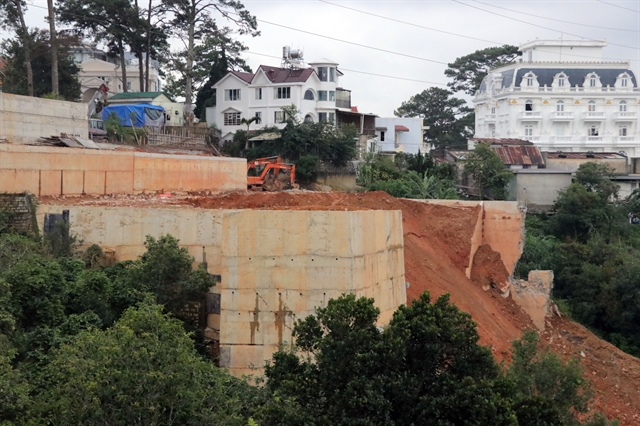
ĐÀ LẠT — Police want to speak to around 20 people in connection with a deadly landslide in Đà Lạt City which killed two people and injured five others. Criminal proceedings have also been launched over construction violations which have been the reason for the landslide. Investigators have examined the scene of the collapse which happened in alley No 36, Hoàng Hoa Thám Street, Ward 10 last Thursday. The embankment showed signs of cracking and it was not safe, so the committee decided to destroy it, he said. The landslide occurred after a nearby concrete embankment broke in heavy rain, causing four homes to be buried.
Source:Viet Nam News
July 03, 2023 21:46 UTC
President hosts outgoing head of EU Delegation to Vietnam
President Vo Van Thuong (R) and Ambassador Giorgio Aliberti , outgoing Head of the European Union (EU) Delegation to Vietnam, at their meeting in Hanoi on July 3. Thuong affirmed that Vietnamese businesses are working to meet the EU’s green and clean requirements for imports. Vietnam is also making significant efforts to realise its commitment on net zero emissions by 2050 and hopes to receive financial and technological assistance from developed countries, including the EU. Vietnam is also making significant efforts to realise its commitment on net zero emissions by 2050 and hopes to receive financial and technological assistance from developed countries, including the EU. The EU places its trust in Vietnam as an important partner in the green transition process and will collaborate with Vietnam to cope with climate change, the diplomat affirmed.
Source:Viet Nam News
July 03, 2023 15:47 UTC
"Hanoi 12 days and nights" film's director passes away
He started working in the film industry in 1953 in the Viet Bac (Northern Vietnam) Base during the resistance war against the French colonials. After graduating from Hanoi Academy of Theatre and Cinema, he continued to study in Russia. File photoIn his 50-year career, Hac made both documentaries and feature films. From 2002 to 2005, his film "Hanoi 12 Days and Nights" produced in 2002 participated in a series of major international film festivals. He used to hold important positions, including Director of the Central Documentary Film Studio, Director of the Cinema Department, and Deputy General Secretary of the Vietnam Cinema Association./.
Source:Viet Nam News
July 03, 2023 13:43 UTC
Market likely to rebound this week: experts
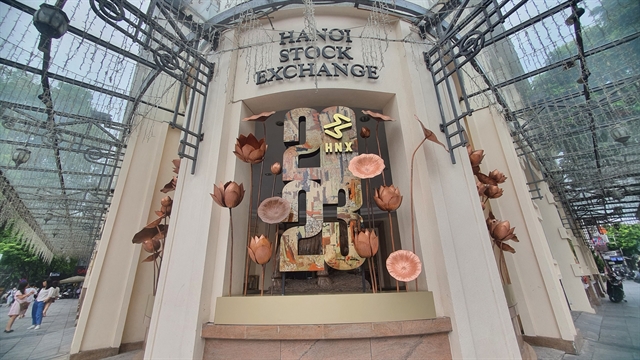
HÀ NỘI — The Vietnamese stock market had its first weekly decline in five last week, squeezed by strong selling pressure as investors took profits at levels near the strong resistance zone of 1,140 points. However, the market appears to have reacted early to positive news given more supportive fiscal and monetary policies, said experts. They net sold for the second week on HoSE at a value of VNĐ340.53 billion, but net bought VNĐ161.79 billion on HNX last week. "In general, the stock market will react early, so it is understandable to see a shift to the positive," said SHS. In its current state, the market benchmark is likely to rebound again soon towards stronger resistance zone of around 1,150 points.
Source:Viet Nam News
July 03, 2023 10:48 UTC