




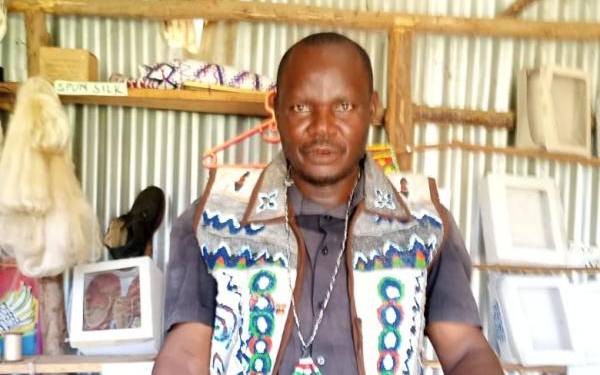
Innovative Kisumu entrepreneur turns discarded fish waste into useful products for local and export market
Newton Owino spotting a fish leather jacket and glove inside his showroom in Kajulu, Kisumu City. Owino says eyes and bones are secondary items in his conceived novel industry where fish skin is the primary raw material. Instead of trypsin, a toxic artificial enzyme that controls decomposition of skin, Owino uses papain, an enzyme obtained from the sap of the pawpaw fruit. Fish factories around Kisumu produce close to 150,000 tons of fish waste yearly mainly from the Nile perch (mbuta in Dholuo) whose fillet is exported to Europe. Apart from shoe makers scattered around Kisumu City, close to 300 local women who collect and clean the fish remains plus 17 employees owe their livelihood to Owino’s unique enterprise.
Source: Standard Digital October 27, 2020 05:26 UTC


