



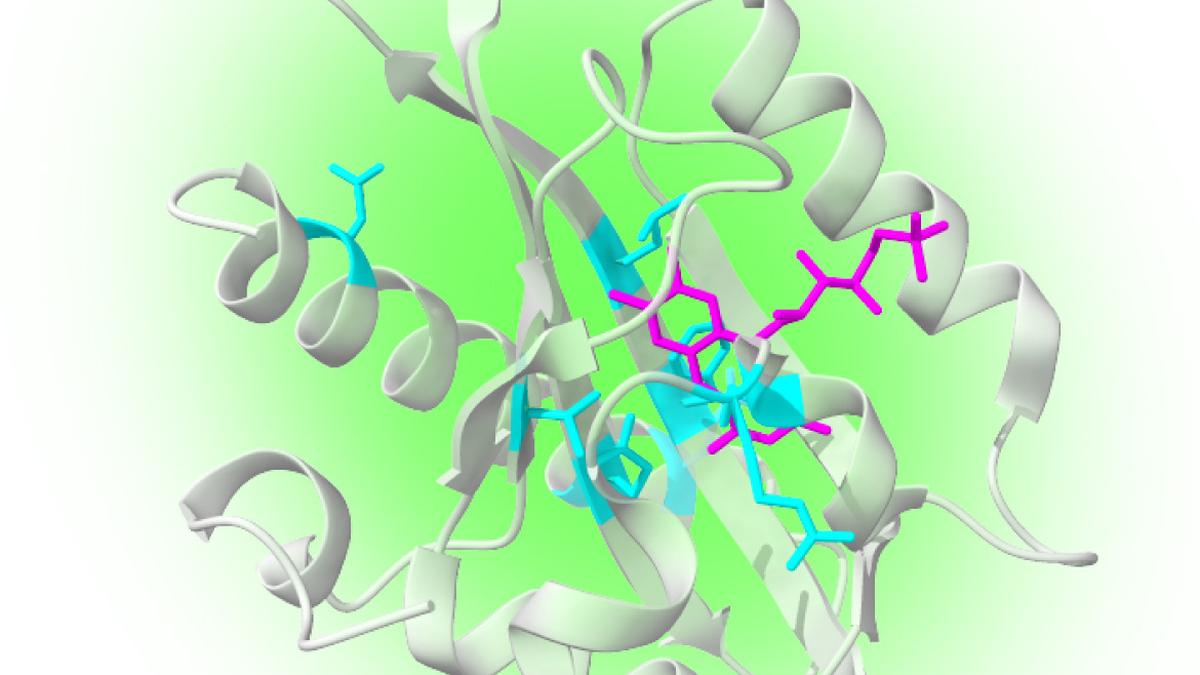
How proteins are being tweaked to be quantum sensors inside the body
In effect they behave as quantum sensors, devices whose operation depends on the behaviour of electrons at the smallest scales. The new results challenge that assumption, opening a path towards genetically encoded quantum sensors and a new class of hybrid quantum-biological technologies. Protein sensorsResearchers at the University of Chicago’s Pritzker School of Molecular Engineering focused on a variant of enhanced yellow fluorescent protein (EYFP), a close relative of green fluorescent protein. Why inside cells mattersMost existing quantum sensors are made from solid materials such as diamond. Protein-based quantum sensors are currently less sensitive than solid-state devices, coherence times are shorter, and photobleaching remains a concern.
Source: The Hindu February 23, 2026 18:02 UTC