




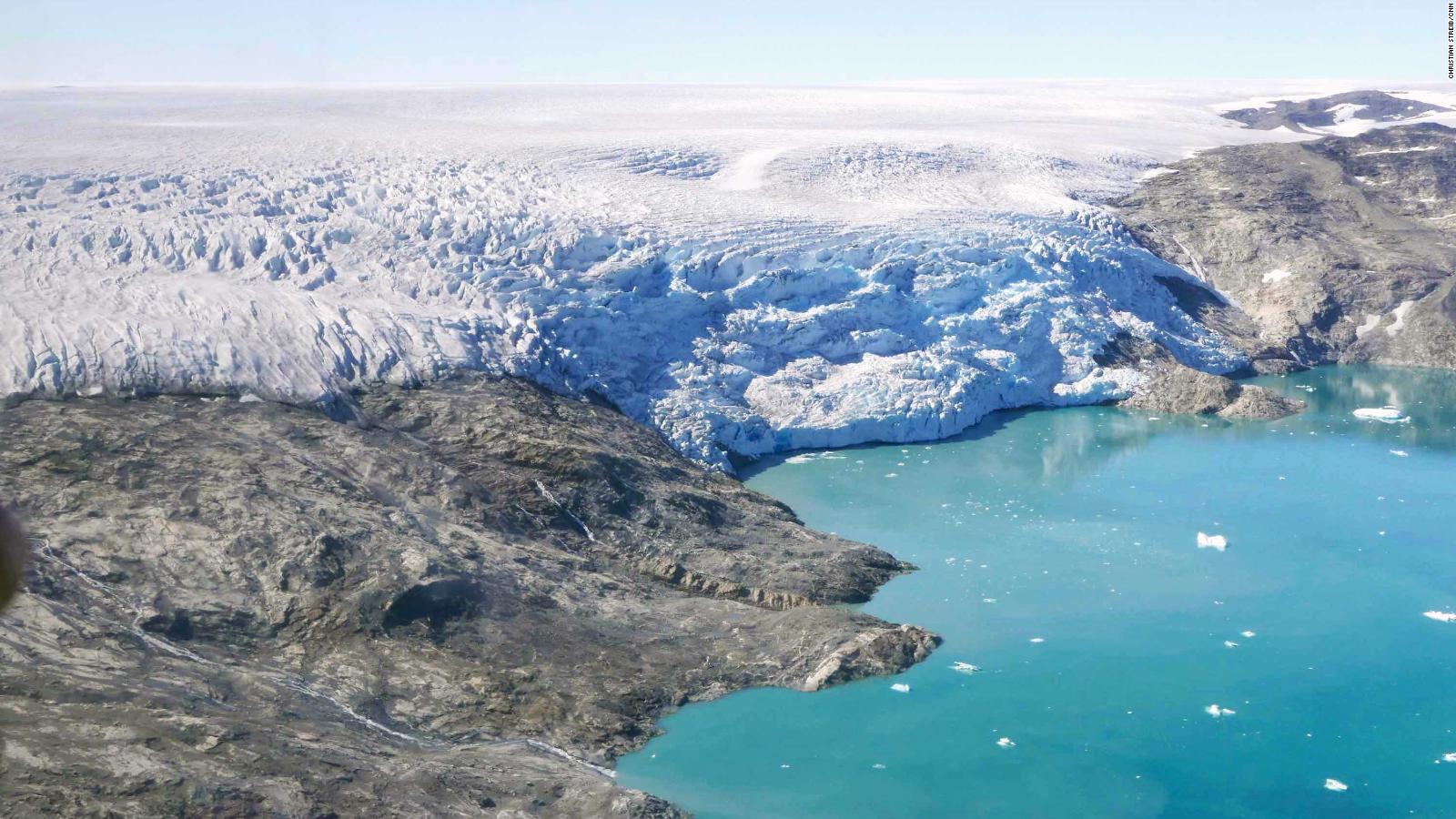
Greenland’s melting glaciers may someday flood your city
And surface melt on Greenland’s ice sheet has been accelerating, spurred by soaring temperatures in the Arctic, which is warming twice as fast as the rest of the planet. Greenland’s overall ice loss has increased dramatically in the last two decades — from shedding an average of 34 gigatons (or 34 billion metric tons) per year between 1992 and 2001 to about 280 gigatons annually since 2002. Much of the melt is occurring at several “hot spots,” where glaciers flow into the sea. Helheim Glacier is the fastest flowing glacier along Greenland’s eastern edge. Scientists are studying it in hopes of improving projections of future sea level rise.
Source: CNN November 30, 2017 05:15 UTC


