



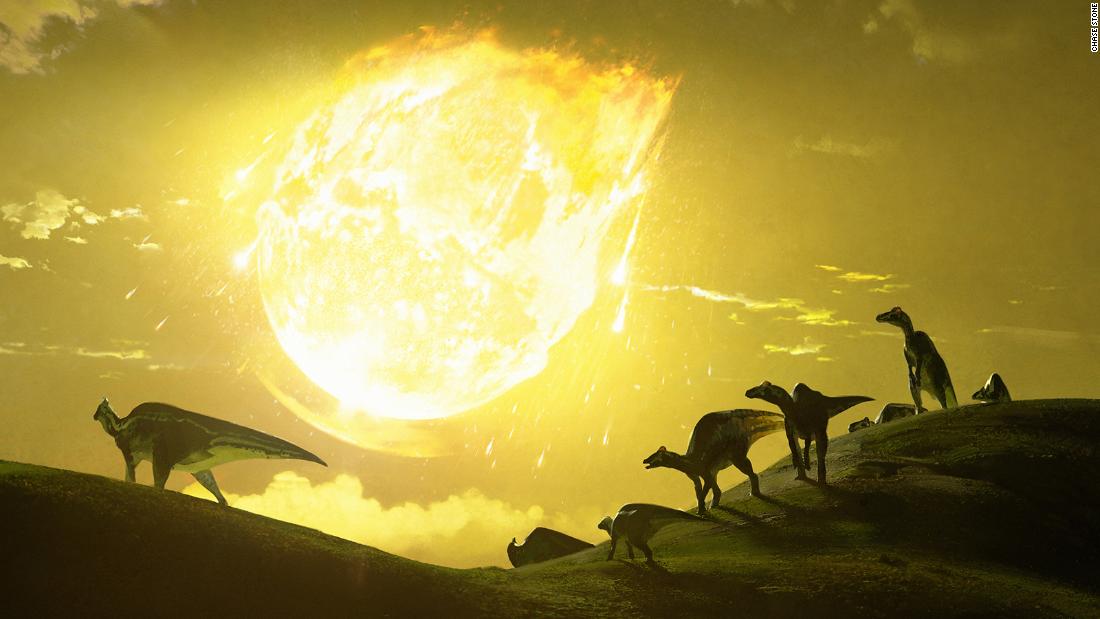
The asteroid that wiped out the dinosaurs hit at 'deadliest possible' angle
(CNN) The city-size asteroid that hit Earth 66 million years ago and doomed the dinosaurs to extinction came from the northeast at a steep angle, maximizing the amount of climate-changing gases unleashed into the atmosphere, a new study has found. That the 200 kilometer (125 mile) wide Chicxulub crater in present-day Mexico was formed when the asteroid struck, ultimately killing off three-quarters of life on the planet, is a fact most scientists agree on. In a new study, an international team of researchers said their 3D simulations showed that the asteroid hit at an angle of 40 to 60 degrees — what Gareth Collins, a professor of planetary science at Imperial College London's department of earth science and engineering, described as a worst-case scenario for the dinosaurs. "The asteroid strike unleashed an incredible amount of climate-changing gases into the atmosphere, triggering a chain of events that led to the extinction of the dinosaurs. This was likely worsened by the fact that it struck at one of the deadliest possible angles," said Collins, the lead author of the study that published Tuesday in the journal Nature Communications, in a statement.
Source: CNN May 26, 2020 15:00 UTC