


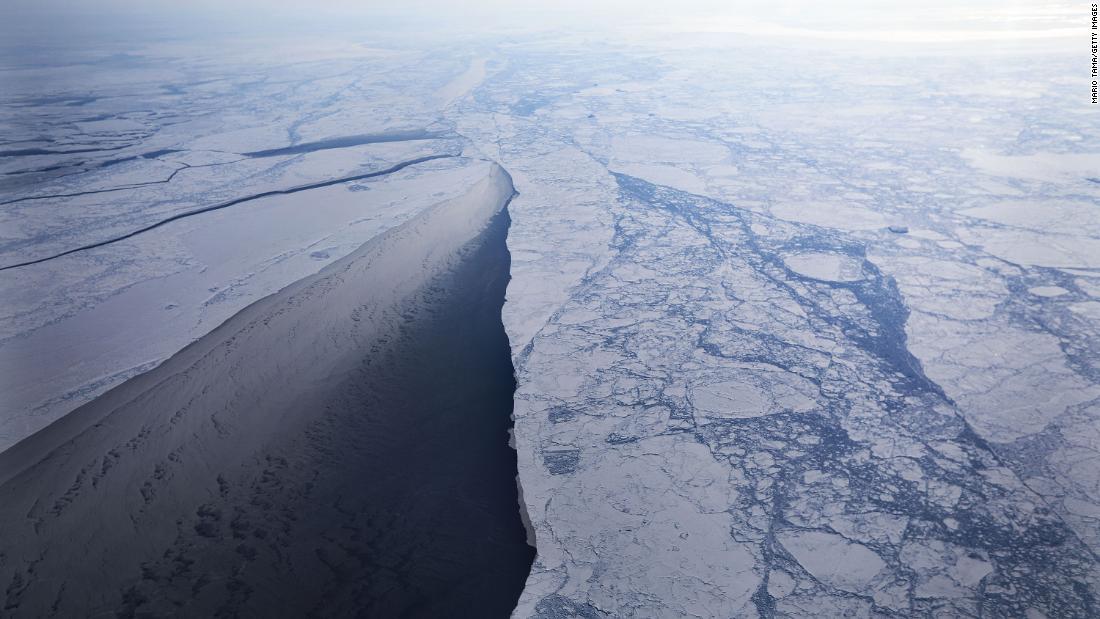
The Arctic's 'last bastion' of sea ice is breaking up for the first time on record
And despite the rapid retreat of sea ice across the region due to climate change, this harsh corner of the globe was expected to be the last to retain year-round sea ice cover. But this year has shown that even the densest sea ice is not impervious to high temperatures. "It really is another indication of the changed Arctic, an Arctic that is covered by more seasonal ice -- ice that melts away every summer, thinner ice cover and a more mobile ice cover," Meier said. In general, the loss of sea ice does have implications for the global climate. This kick-starts a vicious cycle, resulting in even more melting of sea ice and ocean heat absorption.
Source: CNN August 23, 2018 19:41 UTC