

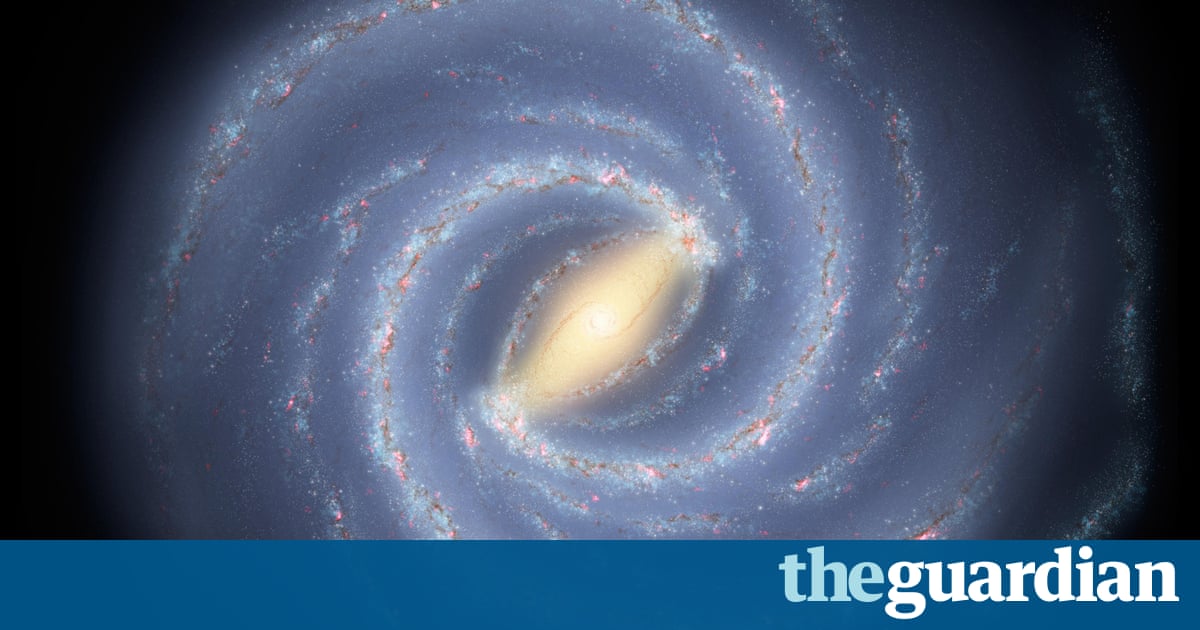
Supermassive black hole discovered near heart of the Milky Way
If the discovery is confirmed, the invisible behemoth will rank as the second largest black hole ever seen in the Milky Way after the supermassive black hole known as Sagittarius A* that is anchored at the very centre of the galaxy. The most likely cause, according to computer models, was a black hole no more than 1.4 trillion km across. “This is the first detection of an intermediate-mass black hole candidate in the Milky Way galaxy,” he said. One theory is that smaller black holes steadily coalesce into larger ones and these come together to form supermassive black holes at the hearts of galaxies, but until now, no definitive evidence for intermediate mass black holes has been found. “We think some of those black holes are the seeds from which the much larger supermassive black holes grow to at least a million times more massive.
Source: The Guardian September 04, 2017 15:00 UTC