




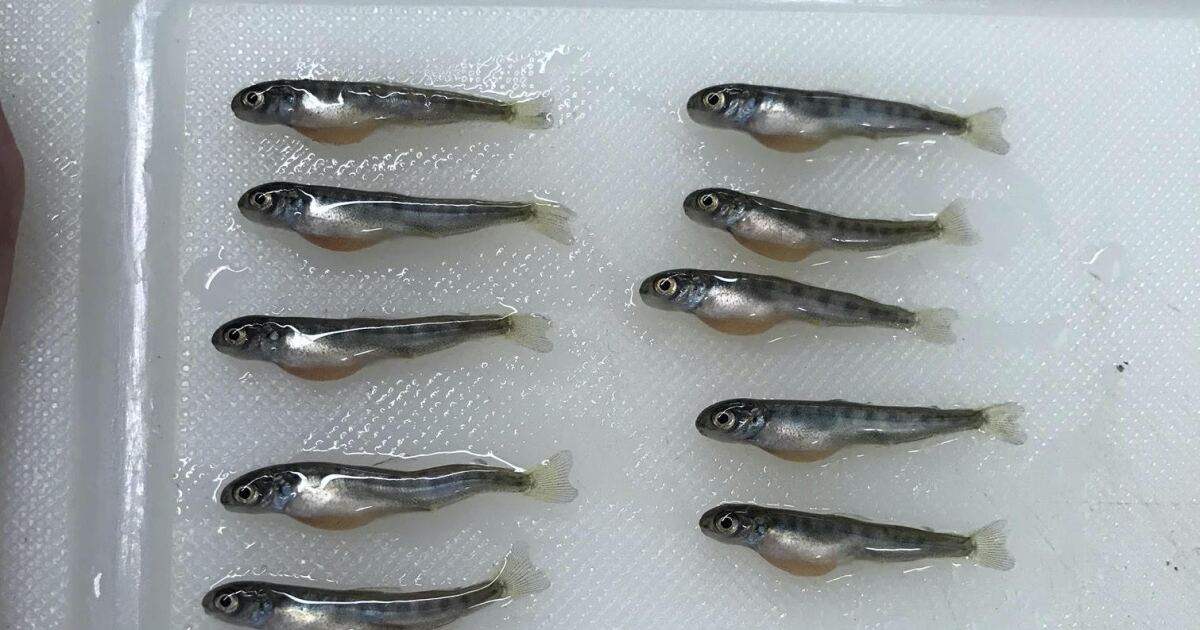
Something was killing baby salmon. Scientists traced it to a food-web mystery
As it happened, scientists and hatchery managers around the Great Lakes had observed similar abnormalities in lake trout, beginning in the 1960s. Although it took a few decades, scientists eventually unlocked part of the mystery: The fish had a deficiency of thiamine, or vitamin B1. In the case of the California salmon, federal scientists and hatchery workers decided to see if their hunch was correct. Fish and Wildlife Service’s Livingston Stone National Fish Hatchery inject a female winter-run chinook salmon with thiamine. Fish and Wildlife Service’s Livingston Stone National Fish Hatchery prepare egg samples from endangered winter-run chinook salmon for further study at UC Davis.
Source: Los Angeles Times January 26, 2021 12:56 UTC