

Selma's 'Bloody Sunday': What to know about the march for civil rights
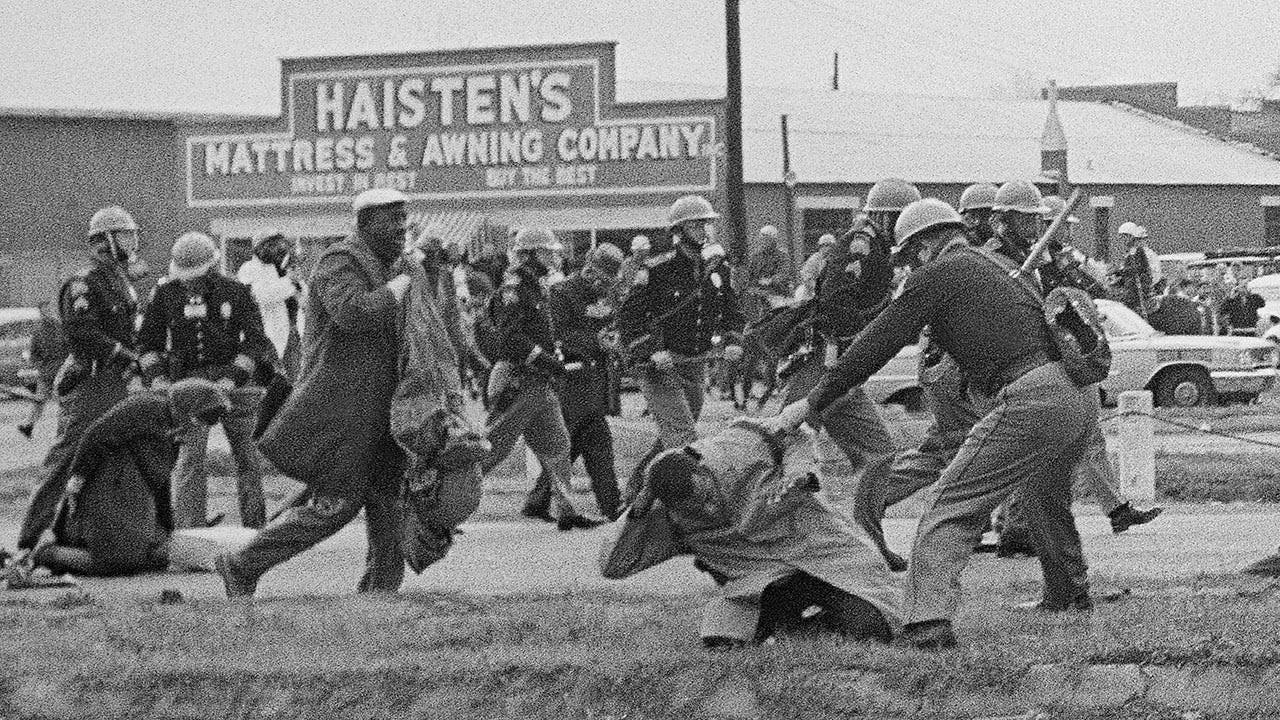
The events of "Bloody Sunday" were captured on television cameras, shocking and outraging the American public. Just over a week later, President Lyndon B. Johnson introduced legislation into Congress that would become the 1965 Voting Rights Act and called the events in Selma a turning point in the civil rights movement. He and Martin Luther King Jr.'s colleague, Hosea Williams, helped lead the peaceful march from Selma on "Bloody Sunday" while King was set to join them later in the day. ROSA PARKS: WHAT TO KNOW ABOUT THE 'MOTHER OF THE CIVIL RIGHTS MOVEMENT'News anchor Frank Reynolds interrupted the film to show the footage from the march. Voting Rights Act of 1965The Voting Rights Act, regarded as one of the most extensive pieces of civil rights legislation in U.S. history, helped overcome the legal barriers imposed at the state and local levels that prevented Black Americans from exercising their right to vote.
Source: Fox News February 21, 2021 11:03 UTC