



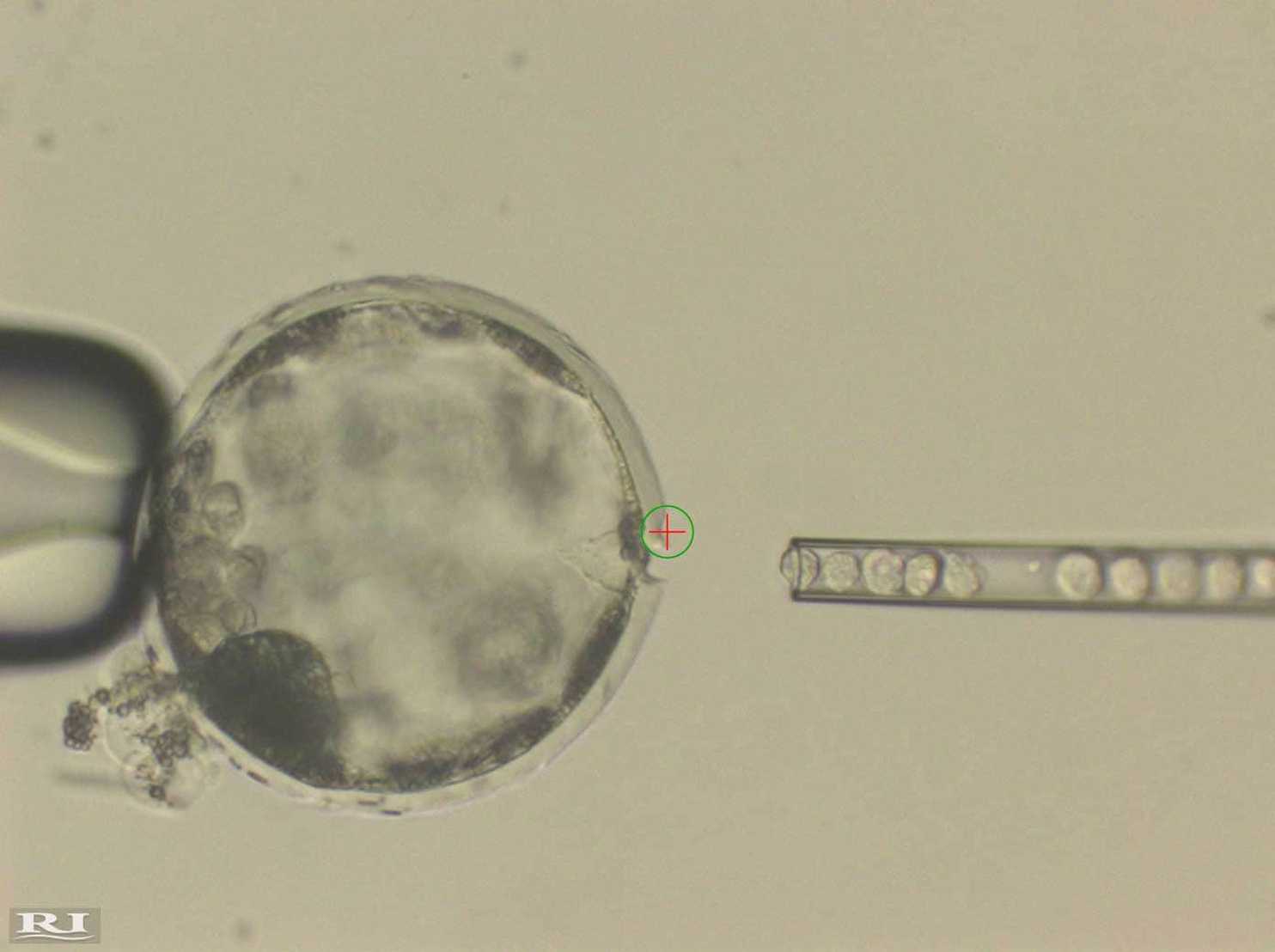
Scientists create a part-human, part-pig embryo — raising the possibility of interspecies organ transplants
(Wu et al./Cell 2017)The Cell study was the result of four years of work involving some 1,500 pig embryos. These embryos were not genetically modified, like Nakauchi's rat embryos, but the Salk scientists used a similar technique to inject human stem cells. “We were just trying to answer the yes or no question of, can human cells contribute at all?” he said. That's another important aspect of chimera embryo research, Izpisua Belmonte said, one that is sometimes overlooked in the focus on organ transplants. Chimera embryos can be used to understand development, examine genetic diseases and test drugs without risking the health of humans.
Source: Washington Post January 26, 2017 18:03 UTC