
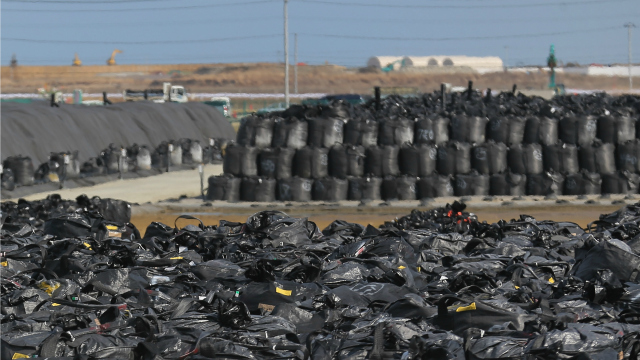
Research indicates Fukushima radioactive fallout may be worse than expected
The particles also concentrated the radioactive caesium (Cs), meaning that, in some cases, dose effects of the fallout are still unclear. Radioactive Cs was released and formed airborne Cs nanoparticles. The airborne Cs nanoparticles were condensed along with the Fe-Zn nanoparticles and the gas from the molten concrete, to form the SiO2 glass nanoparticles, which were then dispersed. Most of the radioactive fallout, which landed on downtown Tokyo a few days after the Fukushima accident, was concentrated and deposited in non-soluble glass microparticles, as a type of 'glassy soot'. As caesium is water-soluble, it had been anticipated that most of the radioactive fallout would have been flushed from the environment by rainwater.
Source: dna June 27, 2016 14:46 UTC