

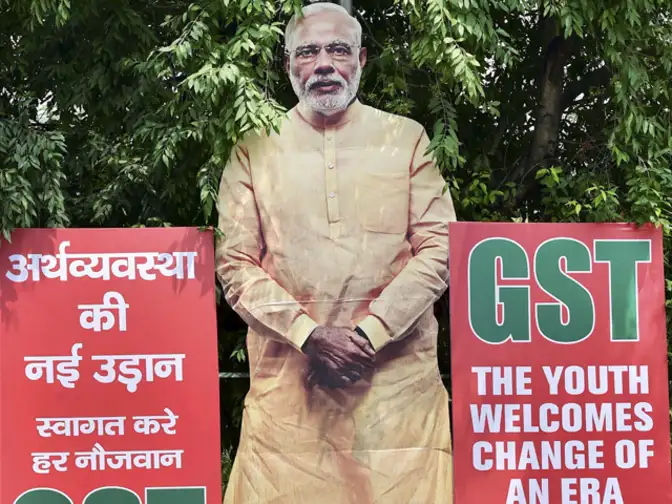
PM Narendra Modi's reform agenda not yet done as India embraces GST
With a landmark goods and services tax now rolling out across India, Prime Minister Narendra Modi is likely to turn his focus to job creation and other key economic reforms.Further big structural steps, such as revamping India’s land acquisition and labor laws, are unlikely to occur before the next national election, scheduled for 2019, as Modi’s Bharatiya Janata Party still lacks a majority in the upper house of parliament.Instead, analysts suggest the BJP is likely to focus on creating jobs while it pursues smaller reforms, including on administrative measures, anti-corruption policies and tax evasion. Modi remains popular in India, but the job issue is one area that could be a political liability for him and his party both in state and national elections.”More urgently, Modi’s party will need to make sure the GST implementation goes smoothly and does not lead to a spike in inflation or sustained economic chaos. “I think he’s done enough for his first term.”The BJP is also likely to try and expand its base of support beyond north India by making political inroads in the southern state of Tamil Nadu, the eastern state of Odisha and attempting to shore up alliances in Andhra Pradesh and Telangana, said Shailesh Kumar, a Eurasia Group senior analyst for South Asia.“Along the way, the administration is also going to do everything it can to keep inflation low as price stability will be critical for his electoral chances,” Kumar said. “This will have the added benefit of supporting additional inward investment, which has become an important driver of economic growth.”Currently, bigger structural reforms are still stymied by the BJP’s lack of a majority in India’s Rajya Sabha, or upper house of parliament.That means Modi’s party has been unable to push through politically-sensitive changes to the country’s land and labour laws , despite the BJP having a majority in India’s lower house of parliament, the Lok Sabha. However, the situation in the upper house should eventually improve if the BJP keeps winning state level elections the way the BJP won big in Uttar Pradesh, the country’s most populous state at 200 million people.“It will open the door for ambitious, sweeping economic reforms that could lift India’s medium-term growth rate,” said Rajiv Biswas, Asia-Pacific chief economist at IHS Markit.“These could include long delayed reforms to land acquisition laws that should catalyze industrial investment as well as further foreign investment liberalization and additional financial services reforms.”
Source: Economic Times July 03, 2017 04:46 UTC