



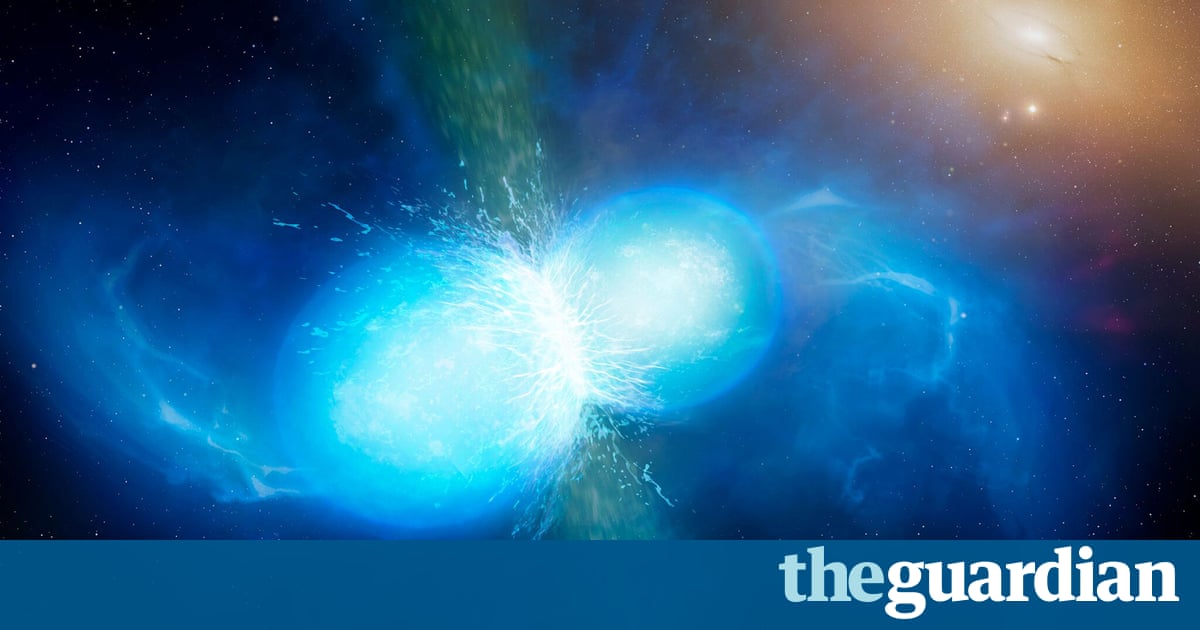
New frontier for science as astronomers witness neutron stars colliding
Within hours, 70 space- and ground-based telescopes swivelled to observe the red-tinged afterglow, making it the first cosmic event to be “seen” in both gravitational waves and light. Neutron stars are the smallest, densest stars known to exist: about 12 miles wide, with a teaspoon of neutron star material having a mass of about a billion tons. Facebook Twitter Pinterest This animation captures phenomena observed over nine days following the neutron star merger known as GW170817. “Neutron stars are at this sweet spot between a star and a black hole,” said Prof Andreas Freise, a Ligo project scientist at the University of Birmingham. “The wedding band on your finger or the gold watch you’re wearing was most likely produced a billion years ago by two neutron stars colliding.
Source: The Guardian October 16, 2017 13:52 UTC


