



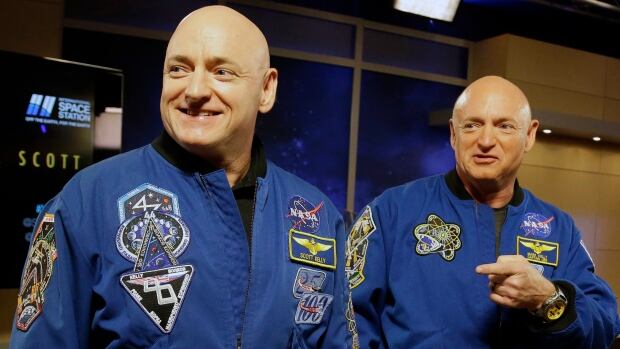
NASA twins study reveals space flight can cause genetic changes
The good news: Kelly largely bounced back after returning home, say scientists who released final results from NASA's twins study, a first opportunity to track the biological consequences of space flight in genetic doubles. This time, NASA-funded scientists looked for a gamut of physiologic and genomic changes that Scott Kelly experienced in space, comparing them to his DNA double on the ground, former astronaut Mark Kelly. But in space, Scott Kelly's telomeres got longer. Studying one pair of twins can't prove risks of space flight, researchers cautioned. Colorado State's Bailey plans to study 10 additional astronauts on year-long missions, using the twin findings as a road map.
Source: CBC News April 11, 2019 19:30 UTC

/https://www.thestar.com/content/dam/thestar/entertainment/movies/opinion/2019/04/11/elisabeth-moss-loves-dual-roles-where-she-cant-go-too-weird-or-too-crazy-or-wrong/elisabethmosshersmell.jpg)
/https://www.thestar.com/content/dam/thestar/politics/federal/2019/04/11/health-canada-to-restrict-pesticide-use-to-protect-bees/neonics.jpg)