
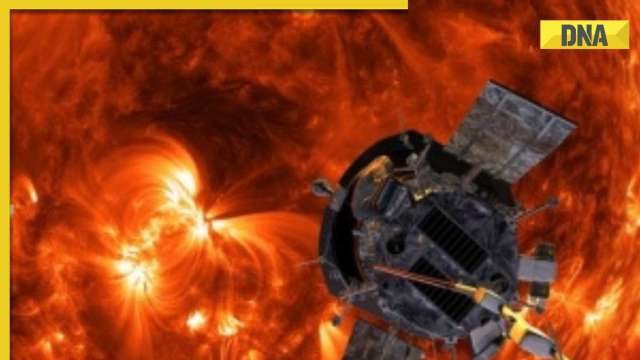
NASA probe solves the mystery of solar winds
Launched in 2018, the Parker Solar Probe was designed to determine what the turbulent solar wind looks like where it's generated near the sun's surface, or photosphere, and how the wind's charged particles -- protons, electrons and heavier ions, primarily helium nuclei -- are accelerated to escape the sun's gravity. The sun-kissing probe also aimed to resolve two conflicting explanations for the origin of the high-energy particles that comprise the solar wind: magnetic reconnection or acceleration by plasma or Alfven waves. Understanding how and where the solar wind originates will help predict solar storms that, while producing beautiful auroras on Earth, can also wreak havoc with satellites and the electrical grid. To do this, the sun-kissing probe had to get closer than 25 to 30 solar radii, that is, closer than about 13 million miles. The teams said Parker probe won't be able to get any closer to the sun than about 8.8 solar radii above the surface -- about 4 million miles -- without frying its instruments.
Source: dna June 08, 2023 13:00 UTC