


Managing working capital in new era
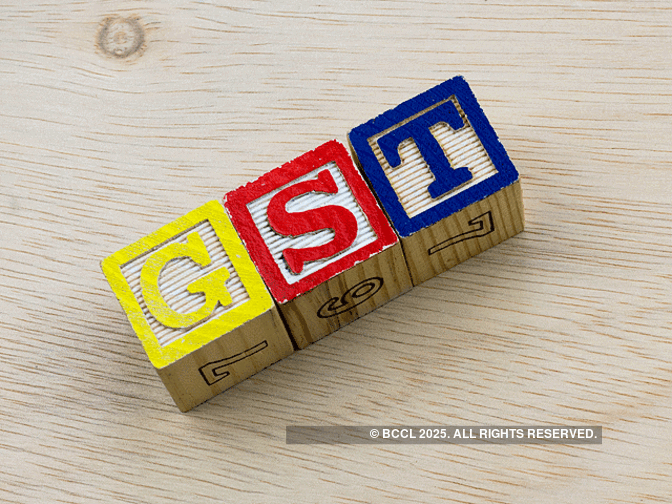
The Goods and Services Tax ( GST ) is both a challenge and an opportunity in effectively managing working capital. ET helps you navigate its complexities and extract the maximum benefi ts that the new regime offers in managing working capital. It would be among the key focus areas for businesses in the short term“GST is a game-changing reform for the Indian economy . For businesses, GST has opened up avenues for efficiencies, reducing cascading of taxes across the supply chain,” said Suresh Nair, Partner, Indirect Tax , EY India1) In earlier tax regime, fi rms were required to pay service tax of 15% versus GST of 18% now.2) The additional tax component would also contribute to increased cash fl ow requirements of companies.1) The implementation of a nationwide tax structure is expected to bring supply chain effi ciencies.2) GST will allow fi rms to have minimum inventories.3) Taxing stock transfers has increased working capital requirements.4) It enables free fl ow of goods across states.1) Earlier, there were different dates of cash outfl ow for various taxes levied - excise duty, service tax and VAT.2) Companies would be able to enjoy additional fl oat for the amounts that they would have paid in the earlier regime.3) Under GST, the consolidated tax will have to be paid at once.4) Firms will need to manage the cash fl ow to support the increased outflow at one go.1) Due to system-related issues, there has been a delay in disbursement of export refund claims for exporters.2) This has caused a strain on working capital in the initial months of GST implementation for exporting companies.With the credit eligibility restricted to making payment within 180 days, fi rms would be required to optimize their procure-to-pay processes to optimally utilize the available input credit.
Source: Economic Times February 26, 2018 03:49 UTC