
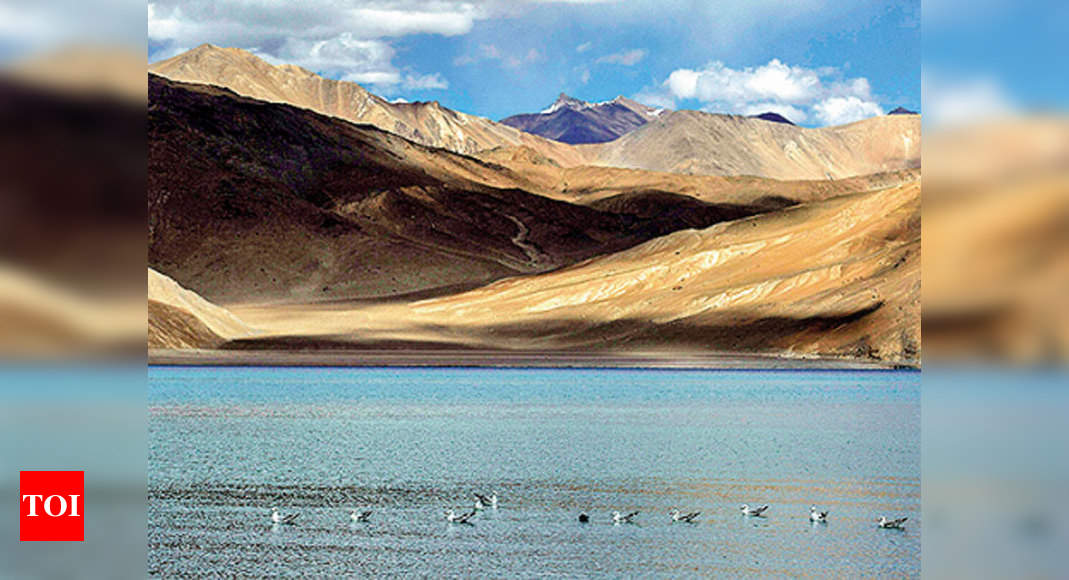
India China standoff: De-escalation in Ladakh to be a long-drawn process
There will be hard-nosed negotiations between the local commanders on the “different points of differences” and the subsequent working out of the modalities for the mutual and verifiable de-induction of troops, said sources.The psychological warfare from across the LAC meanwhile continues unabated, as was the case during the 73-day Doklam face-off in 2017. In yet another veiled threat on Sunday, communist party-run Global Times said PLA recently held “a large-scale manoeuver” exercise to swiftly move thousands of paratroopers along with armoured vehicles to the country’s high-altitude northwestern region from central China “amid the border tensions” with India. This demonstrates China’s capabilities to “quickly reinforce border defences when necessary”, it proclaimed.India, however, is determined to restore status quo ante, which will be hinge on three things. One, the PLA will to have to withdraw its troops who intruded into Indian territory at the four to five confrontation sites at Pangong Tso (Tso means lake), Gogra-Hot Springs area and Galwan Valley region.Two, the PLA will have to demolish its bunkers and other fortifications built at these sites, especially in the “Finger-4 to Finger 8” (mountainous spurs that are separated by a distance of 8-km) area on the northern bank of Pangong Tso.The PLA since early-May has blocked all Indian patrols going west to east beyond Finger-4 by physically occupying the area right till Finger-8, the point where the LAC runs from north to south.And three, China will have to pull-back the 5,000-7,000 PLA troops, who are backed by artillery guns and tanks, from areas along the LAC close to the face-off sites.“With enough acclimatized troops, including additional battalions of Ladakh Scouts, along with artillery guns and tanks, the Indian Army is prepared for the long haul if it comes to that. IAF is also working closely with the Army to keep an eye on the overall situation in the region,” said a source.China’s main grouse in the military domain is the fact that India is challenging its infrastructure dominance by constructing feeder links and bridges to its new 255-km Darbuk-Shyok-Daulat Beg Oldie road, which will allow Indian troops swifter and easier access to areas like the strategically-important Karakoram Pass, Depsang plains and Galwan Valley, among other areas.
Source: The Local June 07, 2020 21:57 UTC