




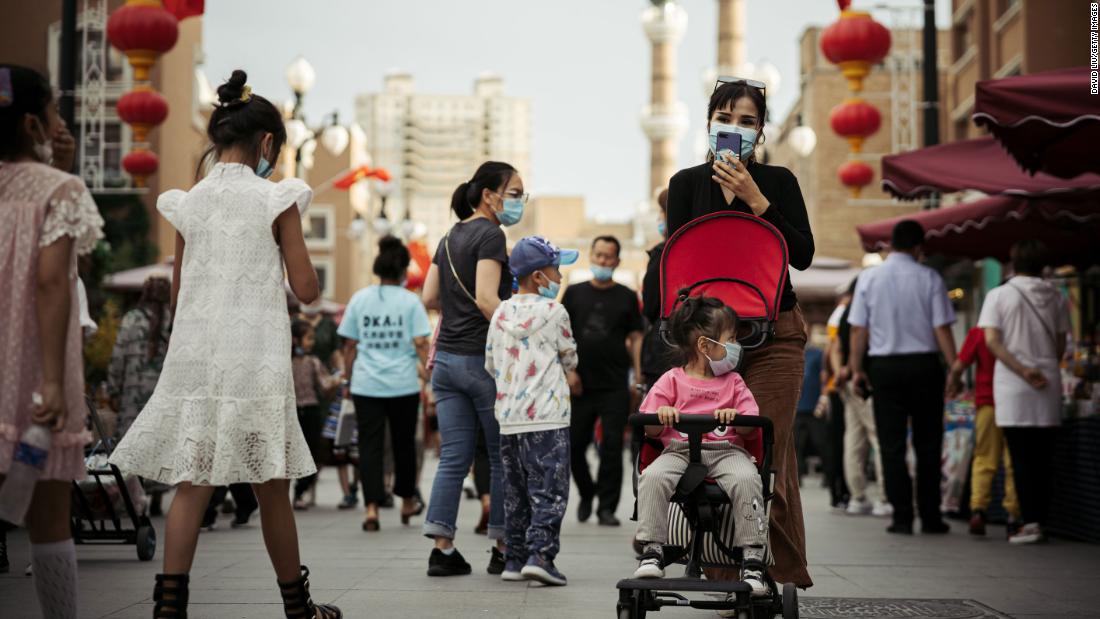
If China needs to boost its population why not scrap birth quotas entirely? The reason might be Xinjiang
But while the number of newborns fell across China, the official birth rate remained comparatively high in the western region of Xinjiang. Between 2017 and 2018, birth rates in Xinjiang dropped by a third, from 15.8 per 1,000 people to 10.7 per 1,000 people. From that year, minority regions began a "special campaign to control birth control violations." State-run media blamed Xinjiang's previously high birth rates on religious extremism , and painted declining fertility as a victory for women's rights. Jobs and surveillanceRetaining control over Xinjiang birth rates is not the only reason for the Chinese government's retention of three-child limits on families.
Source: CNN June 01, 2021 09:17 UTC