
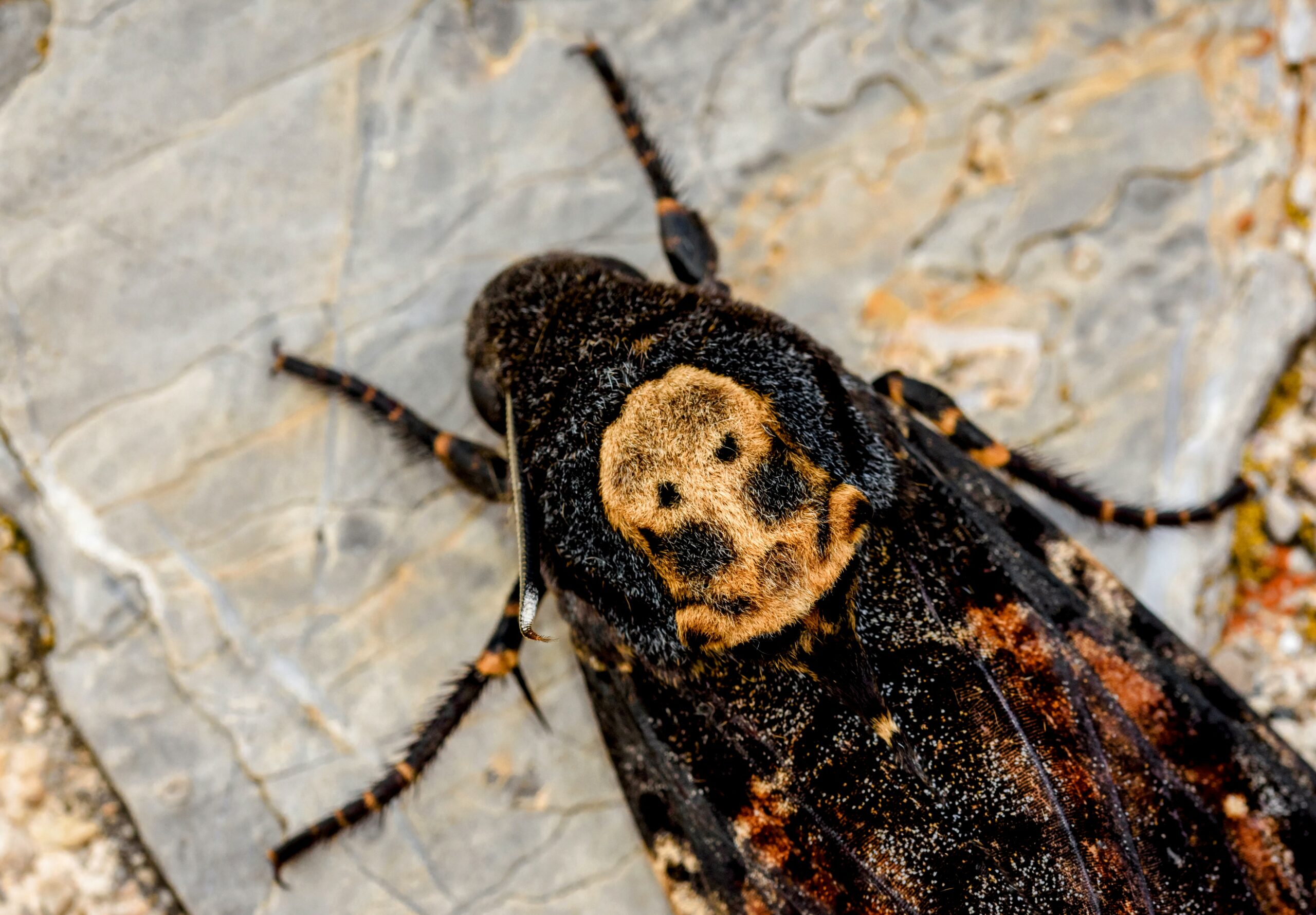
How death’s-head hawkmoths navigate the Alps at night
This gap in understanding is due, mostly, to the challenge of tracking these small animals as they fly, surprisingly rapidly and often at night. A new study on migrating death’s-head hawkmoths (Acherontia atropos) has now used miniscule tracking devices and a light aircraft to track seven individual moths as they migrated across the Alps at night. It is a long-distance Afro-Palearctic migrant that arrives to breed in Europe, north of the Alps, in spring each year. This, along with the insect’s exceptional night vision, indicates that the hawkmoths likely use a combination of visual landmarks and Earth’s magnetic field to navigate considerable distances during migration. One of these pathways involved using a wide valley running west-southwest that enabled the moths to circumvent the Alps altogether.
Source: The North Africa Journal August 11, 2022 20:10 UTC