




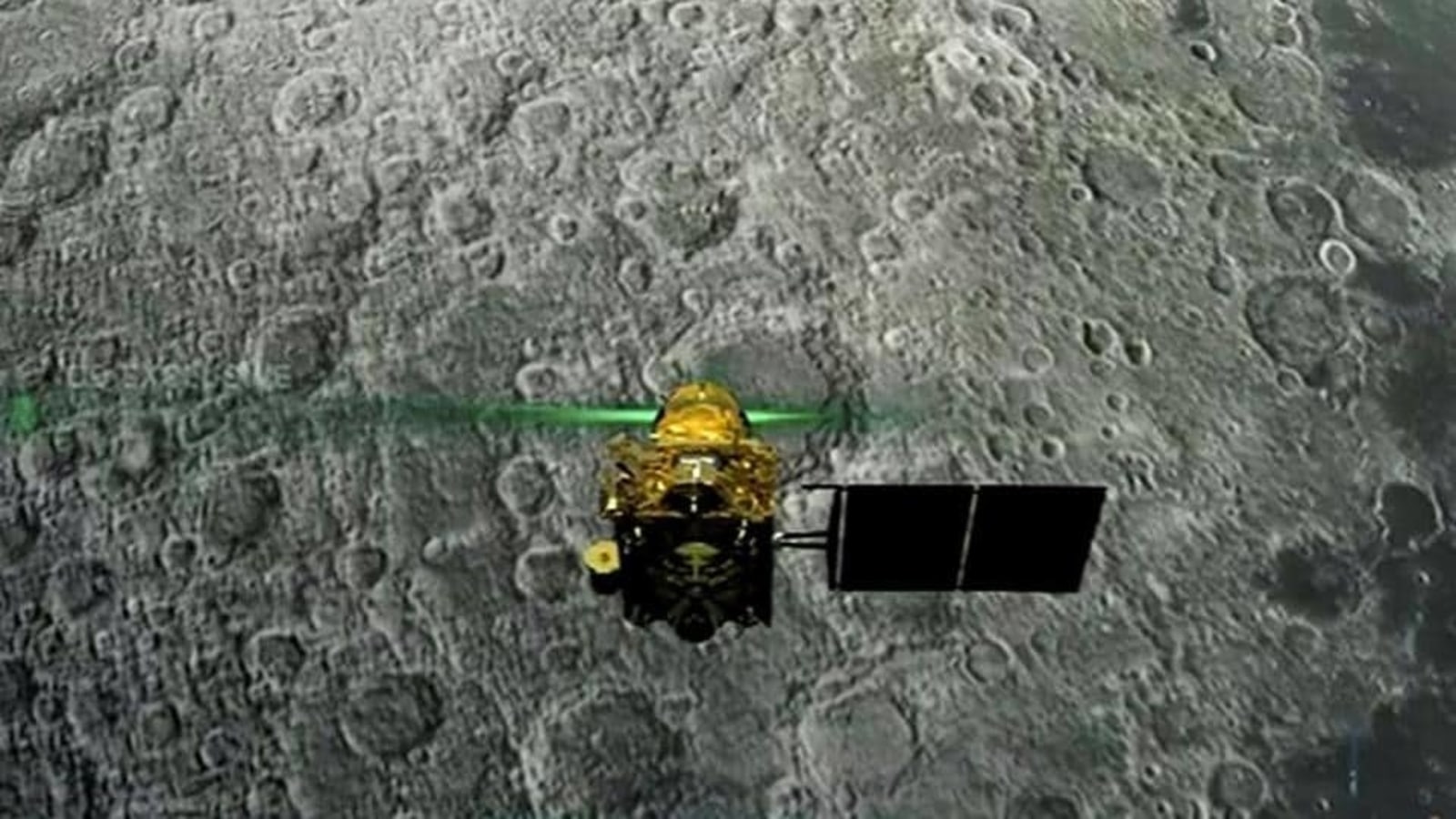
Chandrayaan-2 orbiter detects water molecules on lunar surface
India's ambitious Chandrayaan-2 moon mission may have made a hard landing on the lunar surface in 2019, but the orbiter accompanying it has been providing useful information to scientists back on Earth. And earlier this week, a research paper revealed that the Chandrayaan-2 orbiter confirmed the presence of water molecules (H2o) and hydroxyl (OH) on the surface of the moon. But Vikram lander on-board the mission crash-landed on the lunar surface just 2.1 km from its destination in September that year. Isro said that the Chandrayaan-2 orbiter, with its eight scientific instruments, will continue its seven-year mission to study the surface of the Moon. Chandrayaan-2 was launched with the aim of mapping the variations in lunar surface composition, as well as locating and studying the surface of the Moon for the presence of water.
Source: Hindustan Times August 12, 2021 07:29 UTC