


Algorithmic versus human surveillance leads to lower perceptions of autonomy and increased resistance
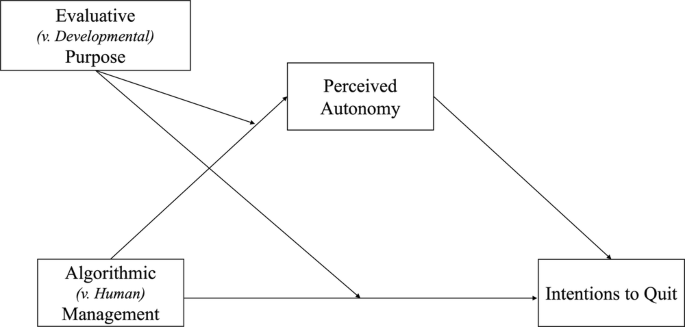
Specifically, we examine whether framing the monitoring by algorithmic surveillance as developmental instead of evaluative (and therefore as more informational and less controlling17,33) reduces participants’ lessened autonomy and reduces their increased resistance when under algorithmic (vs. human) surveillance. In the algorithmic surveillance condition, this message was broadcasted into the Zoom breakout room by the AI Technology Feed. In the human surveillance condition, the research assistant entered the Zoom breakout room and delivered the message. We also assessed whether real-time monitoring by algorithmic (vs. human) surveillance led to reduced perceived autonomy. Next, participants were randomly assigned to one of the following four conditions from our 2 × 2 design: the evaluative human surveillance condition, the evaluative algorithmic surveillance condition, the developmental human surveillance condition, or the developmental algorithmic surveillance condition.
Source: New York Times June 07, 2024 00:26 UTC