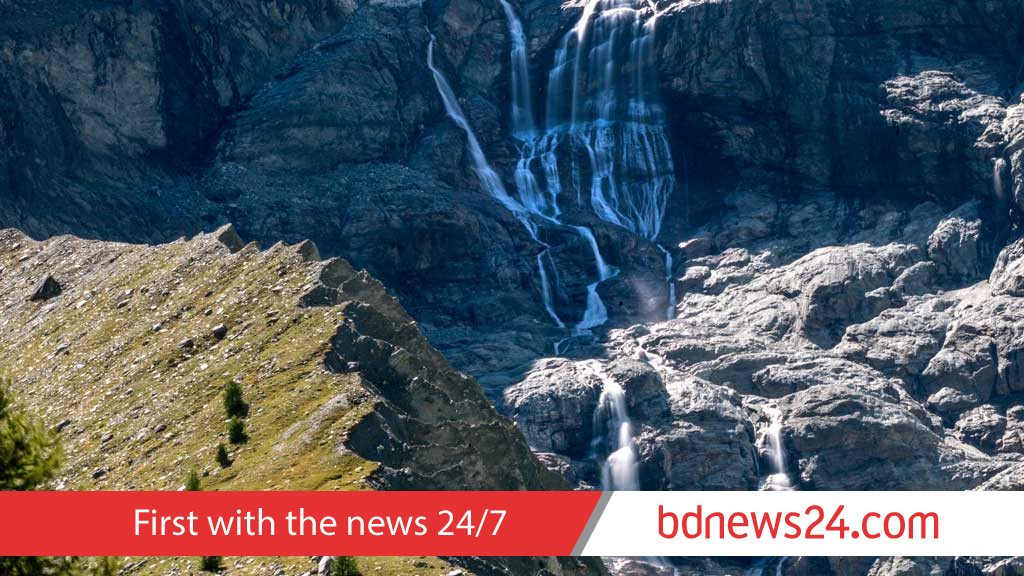
Water from melting ice runs down the side of the Turtmann glacier on a warm summer day, amid climate change, in Turtmann, Switzerland, Sept 3, 2025. REUTERSWater from melting ice runs down the side of the Turtmann glacier on a warm summer day, amid climate change, in Turtmann, Switzerland, Sept 3, 2025. Although the ice melt was not as extreme as in 2022 and 2023, when the glaciers lost 5.9 percent and 4.4 percent respectively, the trend is clear. But if carbon dioxide emissions were to fall to zero globally over the next 30 years, then up to 200 Swiss glaciers at high elevation could be saved, he added. Swiss glaciers below 3,000 metres above sea level suffered in particular this year.