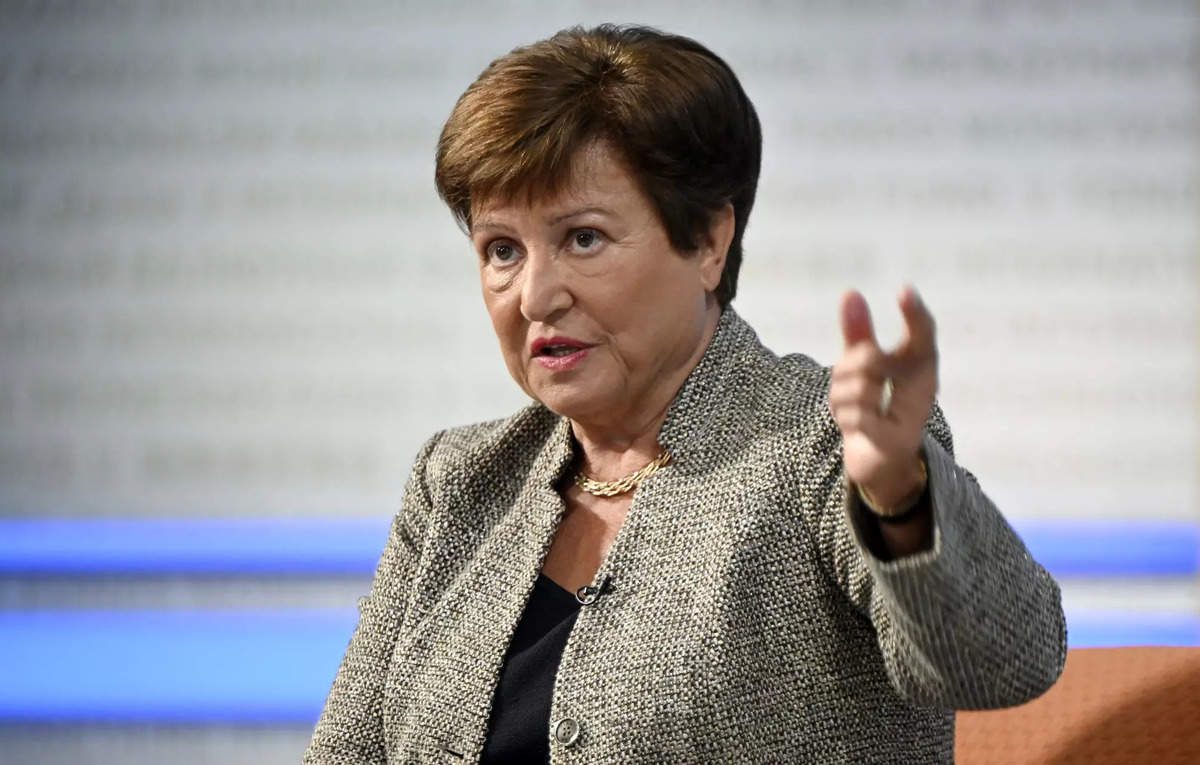
AdvtAdvtJoin the community of 2M+ industry professionals Subscribe to our newsletter to get latest insights & analysis. Georgieva said economies neighbouring Israel and the Palestinian territories saw the conflict weighing on tourism revenues, while Red Sea attacks weighed on freight costs globally.Those factors compounded "the challenges of economies that are still recovering from previous shocks," she told the forum on the sidelines of the World Governments Summit in Dubai.The Iran-aligned Houthis in Yemen have been targeting commercial vessels with drones and missiles in the Red Sea since mid-November, and say their attacks are in solidarity with Palestinians as Israel strikes Hamas militants in Gaza. But the U.S. and its allies characterize them as indiscriminate and a menace to global trade.Several global shippers have been diverting traffic to the Cape of Good Hope, a longer route than through Egypt's Suez Canal.Egypt's Finance Minister Mohamed Maait told Reuters on the sidelines of the summit that part of the impact of the diversion on Suez Canal revenues could be absorbed due to good growth in "the period before the events. "The IMF will publish on Monday a paper that shows phasing out energy subsidies could save $336 billion in the Middle East, equivalent to the economies of Iraq and Libya combined, Georgieva said.Georgieva said that eliminating regressive energy subsidies also "discourages pollution, and helps improve social spending. "In the Middle East and North Africa (MENA) region, fossil fuel subsidies made up 19% of GDP in 2022, the IMF has said.It has recommended the gradual unwinding of energy subsidies for the region's economies, including oil exporters, and suggested targeted support as an alternative.Advanced technology, including Artificial Intelligence , is a key theme of focus at the World Governments Summit, with several top executives from major global tech firms due to speak, including Sam Altman , CEO of OpenAI.Georgieva said globally, 40% of jobs are exposed to AI, and countries that lack the infrastructure and a skilled workforce to invest could fall behind.Regional economies such as the UAE and Saudi Arabia have significantly increased investment in AI as part of strategies to diversify income sources.