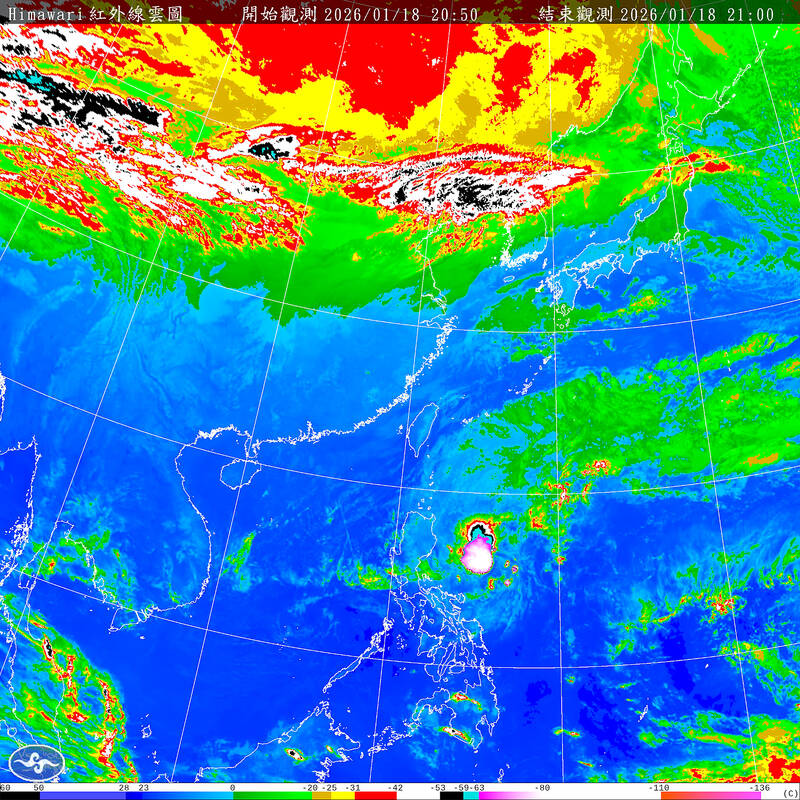
These forecasts noticeably improved last year, with errors in 24-hour forecasts for typhoon paths 12 percent lower than in 2024, it said. Introducing smart programs and AI models has significantly reduced errors in typhoon forecasts, the CWA said. The CWA frequently used AI models last year as forecasters became more familiar with them, improving typhoon forecast accuracy, Huang said. With success in more accurately predicting typhoon paths, the CWA would next turn to applying AI models to model wind and rain levels, Huang said. The agency’s traditional physical models have reached resolution of 1 to 3km, while large AI models only have a resolution of 25 to 28km, he said.